
How Genome Assembly is Becoming a Frontline Conservation Tool
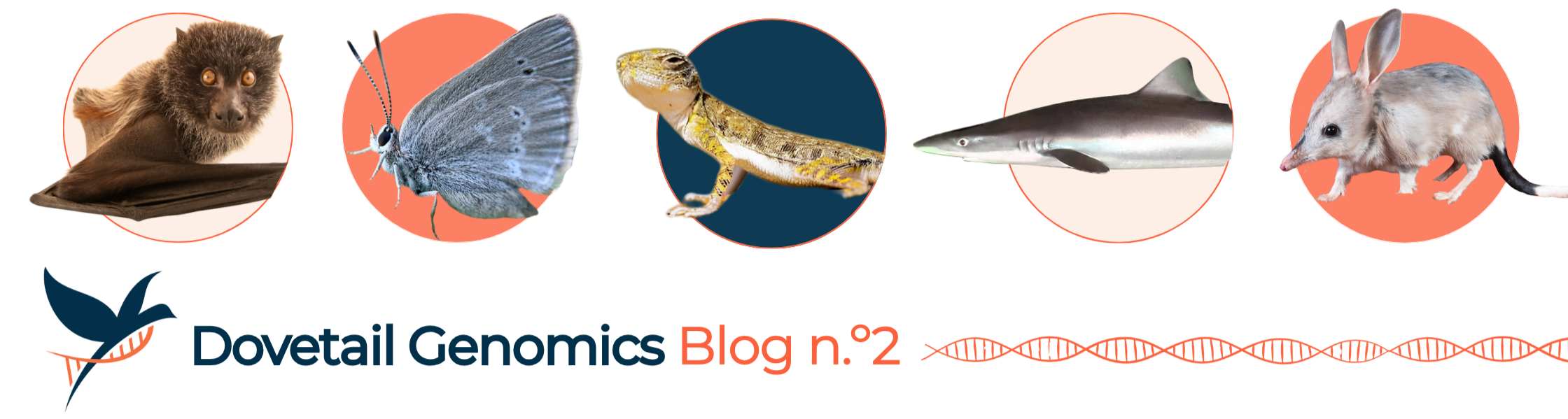
Every extinction is, in a sense, the permanent deletion of specie’s genetic code. Millions of years of evolutionary trial and error, wiped. Currently, we are witnessing extinction rates not seen since the dinosaurs disappeared. In the midst of this, a quiet revolution in genome sequencing is giving conservation biologists something they’ve never had before: a complete, chromosome-level readout of an endangered species’ DNA, built while there’s still time to act on it.
We’re Losing Species Faster Than We Can Study Them
The numbers are sobering. The IUCN Red List currently lists roughly 49,000 species as threatened with extinction, nearly three in ten of all species that have been formally assessed. 1,2 Contemporary extinction rates are estimated to run somewhere between 1,000 and 10,000 times higher than the natural “background” rate seen in the fossil record, leading many scientists to describe this period as the beginning of a sixth mass extinction. 3,4
Sharks and rays are near the sharp end of that trend, alongside them are amphibians, small mammals, island endemics, and narrow-range plants. These are species that are often overexploited, slow to reproduce, or confined to a shrinking habitat. The traditional conservation tools (tagging, population surveys, catch monitoring) are indeed essential but they’re fundamentally reactive; they tell you a population is declining after the decline is already underway. Genomics offers something different, it allows for a way to understand the species’ evolutionary history, population structure, and adaptive potential directly at the molecular level, often from a single well sequenced individual.
Raising the Bar for Reference Genomes
It’s worth taking some time to consider what a modern reference genome actually requires, because the bar has risen enormously in the last decade.
A low quality and fragmented draft genome, scattered across tens of thousands of disconnected pieces, is of limited use for conservation genetics. The questions that are asked in conservation genetics (How much genetic diversity is left in this population? Are different regional populations genetically distinct? Is inbreeding a risk?) necessitates a chromosome level assembly. This level of assembly requires the DNA sequence to be correctly ordered and oriented into complete chromosomes, the way it actually exists inside a cell.
To get there, usually two types of complementary technologies are used:
Long read sequencing (ex. PacBio HiFi) produces highly accurate reads tens of thousands of base pairs long; these can be stitched into long, contiguous stretches of DNA called contigs.
Chromatin proximity ligation methods measure which pieces of DNA are physically close to each other inside the nucleus, providing long range information needed to correctly order and orient contigs into chromosome level assemblies.
The second step is where the Dovetail® Omni-C™ and LinkPrep™ technologies come in. Unlike older Hi-C protocols that rely on a specific restriction enzyme to cut DNA at predictable sequence motifs (which can leave gaps in coverage where those motifs are sparse), Omni-C™ and LinkPrep™ use sequence independent enzymes to fragment chromatin. 5,6 The result is much more even, unbiased coverage across the entire genome, which in turn means contigs can be scaffolded into chromosomes more completely and more accurately, even in regions that older methods would have struggled to resolve. 5 For non-model and wild caught species where sample material is often limited, the reliability of the unbiased coverage matters enormously.
Once the contigs are scaffolded into chromosome level sequences, researchers then manually inspect and correct the assembly using contact map visualization tools and quality check it against benchmarks like BUSCO (which checks for the expected complement of universal single copy genes) and Merqury (which scores base level accuracy). Only after clearing those bars does an assembly become a trustworthy foundation for downstream conservation genomics.
Five Genomes, Five Species on the Brink of Extinction
The combination above, PacBio long read sequencing paired with Dovetail® Omni-C™/LinkPrep™, has become a genuine workhorse of conservation genomics. Here are five recent publications showcasing how a chromosome level genome was built to answer a specific high stakes conservation question:
School shark (Galeorhinus galeus):Globally distributed but now are Critically Endangered after fishing pressure drove population declines of more than 80% over the last 79 years. A 2026 genome from researchers at the University of Western Australia’s Minderoo OceanOmics Centre, CSIRO, and the University of Tasmania combined PacBio HiFi with Dovetail® Omni-C™ data to assembly a 4.8 billion base pair genome, capturing over 92% of expected vertebrate genes. Comparing male and female assemblies also revealed chromosome regions where high genetic variation and low DNA methylation co-occur, a pattern that may point to a broader link between genetic diversity and gene regulation in sharks. 7
Greater bilby, or Ninu (Macrotis lagotis): A culturally significant, Critically Endangered Australian marsupial. In 2024, researchers publishing in Nature Ecology & Evolution combined a HiFi and Omni-C™ reference genome with genomes from extinct relatives and Indigenous ecological knowledge to guide the species’ ongoing conservation. 8
Half-moon hairstreak, now recognized as the “curiously isolated hairstreak” (Satyrium curiosolus, formerly classified as S. semiluna): An endangered Canadian butterfly surviving as a single tiny, deeply inbred population in Alberta. Its chromosome level genome, built with PacBio HiFi and Dovetail® Omni-C™, was used to directly answer a live conservation question: whether “genetically rescuing”, by bringing in individuals from other populations to help restore is lost diversity, is a right call for this population. 9
Emirati leaf toed gecko (Asaccus caudivolvulus): The only vertebrate species endemic to the Untied Arab Emirates, and Critically Endangered as rapid coastal development reshares its habitat. Its 2024 genome, the first ever for its entire family, Phyllodactylidae, was paired with resequencing data to reveal a measurable, more than 50% rise in inbreeding within just nine years, directly tied to habitat loss. 10
Bonin flying fox (Pteropus pselaphon): A Critically Endangered fruit bat found only in Japan’s remote Ogasawara Islands, with no prior genomic resources at all. Its 2026 genome, built with long read sequencing and Omni-C™ scaffolding, reached over 98% completeness and is intended to directly support both conservation management and research into disease susceptibility in flying foxes. 11
The Significance of a Chromosome Level Assembly
Chromosome level assemblies provide an infrastructure for conservation work, once it exists it becomes the reference point of a whole suite of downstream research:
Population structure and connectivity: comparing genetic variations across geographically separated populations to identify which are isolated and most vulnerable.
Inbreeding and genetic diversity monitoring: flagging populations at risk of losing adaptive potential.
Genetic rescue and management decisions: evaluation whether introducing individuals from other populations would help, or whether a population’s isolation is better left alone.
Close kin mar recapture and abundance estimation: genetic methods that are increasingly used to estimate population sizes for hard to survey species.
Species and stock identification: verifying that specimens or products genuinely belong to the species in question, an important tool against illegal trade and unreported fishing.
For species that are overexploited, slow to reproduce, or reduced to a single shrinking population, having this infrastructure in place means that researchers can move faster the next time a management decision needs to be made.
Quiet Work Against a Quiet End
Genome assembly won’t stop habitat loss, overfishing, or climate change on its own. But it is quietly changing what’s possible in conservation science. It turns “we think this population is declining” into “we can measure exactly how much genetic diversity remains and where the greatest risks are.” As sequencing costs continue to fall and technologies become more accessible, a chromosome level reference genome is arriving, hopefully, in time to make a difference for species at risk.
References
IUCN Red List of Threatened Species – summary statistics. https://www.iucnredlist.org/
Our World in Data, “Number of species threatened with extinction” https://ourworldindata.org/grapher/number-species-threatened
Britannica, “Extinction rate.” https://www.britannica.com/science/extinction-rate
Royal Society, “Past and future decline and extinction of species” https://royalsociety.org/news-resources/projects/biodiversity/decline-and-extinction/
Dovetail® Genomics, Omni-C™ Kit product overview https://cantatabio.com/Omni-C
Dovetail® Genomics, LinkPrep™ Kit product overview https://cantatabio.com/linkprep
de Jong, E., Devloo-Delva, F., Anstiss, L. et al. Chromosome-level assembly of the Critically Endangered school shark, Galeorhinus galeus (Linnaeus, 1758). Sci Data 13, 1121 (2026). https://doi.org/10.1038/s41597-026-07284-2
Hogg, C.J., Edwards, R.J., Farquharson, K.A. et al. Extant and extinct bilby genomes combined with Indigenous knowledge improve conservation of a unique Australian marsupial. Nat Ecol Evol 8, 1311–1326 (2024). https://doi.org/10.1038/s41559-024-02436-2
MacDonald, Z.G., Dupuis, J.R., Glasier, J.R.N., Sissons, R., Moehrenschlager, A., Shaffer, H.B. and Sperling, F.A.H. (2025), Whole-Genome Evaluation of Genetic Rescue: The Case of a Curiously Isolated and Endangered Butterfly. Mol Ecol, 34: e17657. https://doi.org/10.1111/mec.17657
Burriel-Carranza, B., Mochales-Riaño, G., Talavera, A., Els, J., Estarellas, M., Al Saadi, S., Urriago Suarez, J. D., Olsson, P. O., Matschiner, M., & Carranza, S. (2024). Clinging on the brink: Whole genomes reveal human-induced population declines and severe inbreeding in the Critically Endangered Emirati Leaf-toed Gecko (Asaccus caudivolvulus). Molecular Ecology, 33, e17451. https://doi.org/10.1111/mec.17451
Nabeshima, K., Shimada, Y. & Onuma, M. A reference genome assembly of Pteropus pselaphon. Sci Data 13, 909 (2026). https://doi.org/10.1038/s41597-026-07245-9