
Comprehensive Somatic Variant Detection
Crack the Cancer Code
The Cancer Genome Remains Unsolved
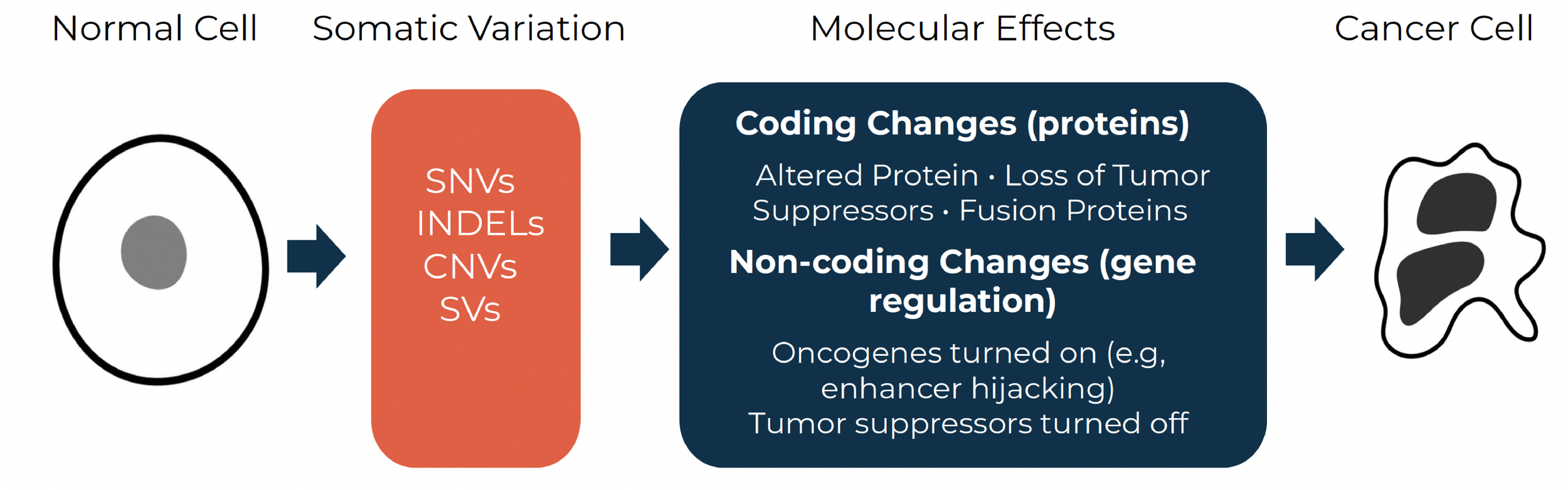
Genetic variation plays a crucial role in many diseases, especially cancer where mutations drive disease development and progression. Somatic variants – such as single nucleotide variants (SNVs), small insertions or deletions (INDELs), copy number variations (CNVs), and large structural variants (SVs) - can disrupt cellular functions by altering gene expression, thereby activating or inactivating oncogenes or tumor suppressor genes, respectively.
Even with extensive efforts, over 50% of late-stage cancers remain driver negative, underscoring serious gaps in somatic variant catalogs.
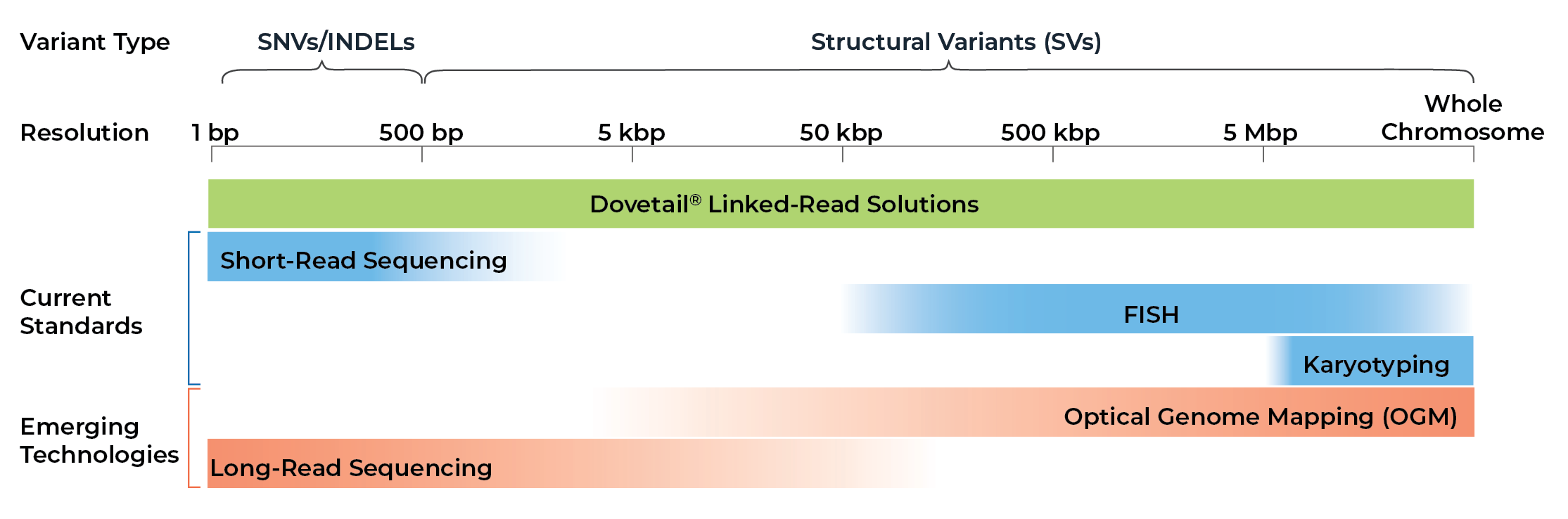
Current technologies struggle to detect large SVs—events too large for standard next generation sequencing (NGS) methods to reliably identify. To address this gap, researchers resort to using multiple platforms, increasing study complexity and cost—yet still miss key drivers of disease.

“Despite their importance, accurate identification of somatic structural variants remains a significant bottleneck in cancer genomics.”
— Aydin et al (2025) Nature Scientific Reports
Known Limitations of SV Detection Using Short-Reads
Breakpoint Dependence
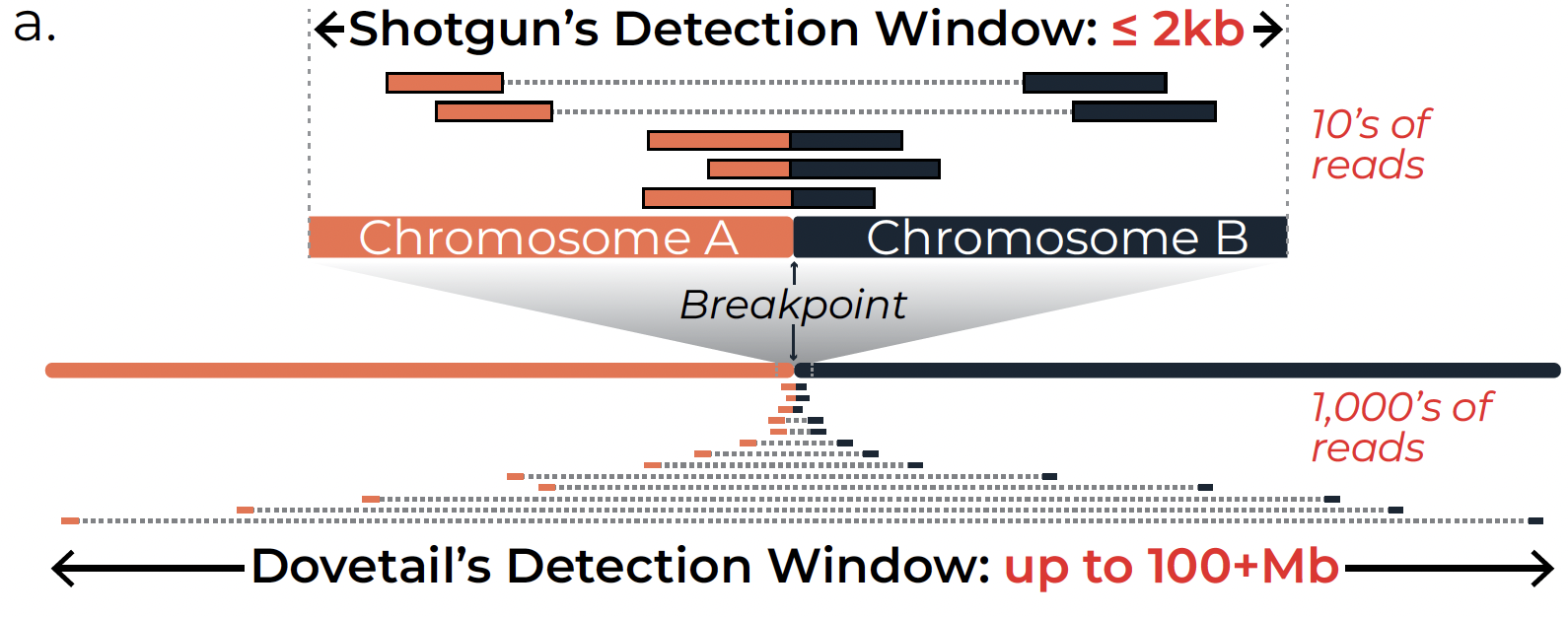
➡ Only reads that align on SV breakpoints directly support variant calls.
➡ High sequencing depths are required for sufficient breakpoint spanning reads, costly for low VAF events.
Genomic Blind Spots
➡ Low mappability regions(e.g. IGH, IGL), or repetitive sequences pose a known challenge for SV detection.
➡ Multiple breakpoints in complex rearrangements cannot be linked.
Low Sensitivity, High False Positives
➡ Low signal-to-noise detection drives high SV false positive calls.
➡ Chimeric read artifacts raise the noise floor creating further challenges, especially in FFPE samples.
Somatic Variants are Drivers of Cancer
One Assay. All Variants. Any Sample.
From SNVs to complex rearrangements, Dovetail delivers a unified solution for comprehensive variant discovery and interpretation in cancer genomes. Dovetail® technology generates libraries with two unique features:
a. Linked-reads - Provides superior evidence for an SV by using both breakpoint spanning and breakpoint flanking reads.
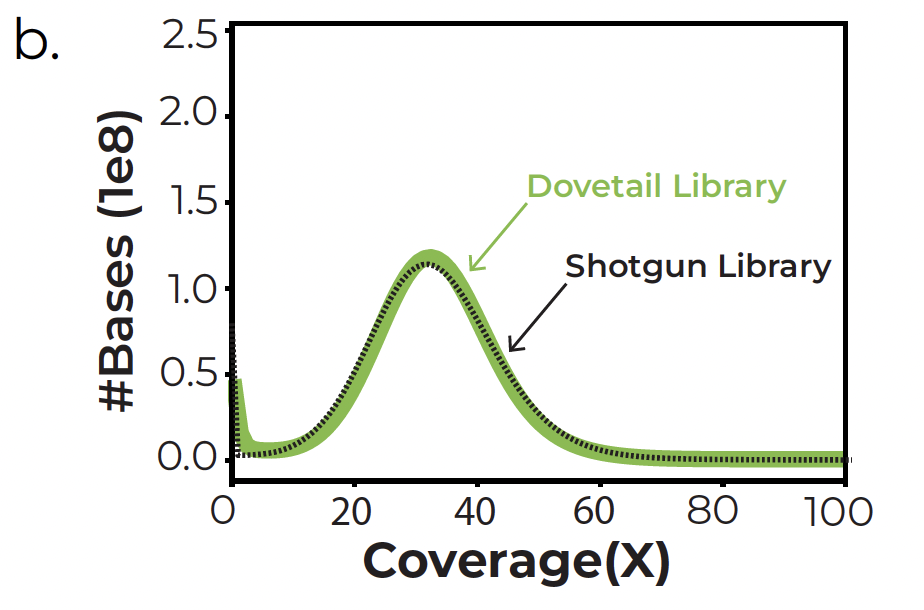
b. Uniform coverage - Enables comprehensive variant detection including SNVs, INDELs, and CNVs.
Dovetail technology is compatible with fresh frozen samples (cells, blood, tissues) and FFPE, and can be run on any leading short-read sequencing platform.
Dovetail® Linked-Read Advantages.
-
Discover SVs with high sensitivity and precision
-
SNVs, INDELs, CNVs, and SVs captured in a single linked-read NGS assay
-
Works on standard short-read sequencers—no HMW DNA or complex analysis needed
-
Enables SV detection from degraded samples